In 1966, Margaret Dayhoff reasoned that duplication and fusion is a fundamental mechanism for generating protein complexity. Her insight inspired generations of scientists, several of whom would demonstrate this trajectory with short peptides that symmetrically assemble into a contemporary protein architecture. But how did these oligomerizing peptides, able to adopt complex conformations, emerge in the first place? In the present review, the evolution of an ancient and ubiquitous nucleic acid-binding element is traced from a simple, heterochiral peptide that coacervates with RNA to a folded-domain that binds with high affinity to the minor groove of double-stranded DNA.
Liam M. Longo
Specially Appointed Associate Professor
Earth-Life Science Institute
Institute of Science Tokyo
Affiliate Research Scientist
Blue Marble Space Institute of Science
Recent News
Highlights
- 2024/04/19Manuscript Accepted to Seibutsu Butsuri
- 2024/01/31Manuscript Accepted to Nature Ecology and Evolution
- 2023/10/18Longo Lab Awarded Grant by the John Templeton Foundation
- 2023/10/16Marina Herrera Sarrias visits Longo Lab
- 2023/10/04Prof. Ita Gruić Sovulj Visits Longo Lab
- 2023/09/25Tatsuya Corlett Joins Longo Lab
- 2023/08/25Delivered Award Lecture for Winners of the Hong Kong Student Science Project Competition
- View All News→
Evolution of Folded Domains from Short, Oligomerizing Peptides through Coacervation [ Link ]
Liam M. Longo*Corresponding or Co-corresponding
Primitive purine biosynthesis connects ancient geochemistry to modern metabolism [ Link ] 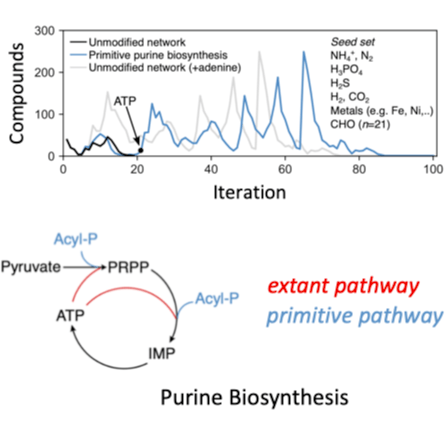
Joshua E. Goldford*Corresponding or Co-corresponding^Equal contribution, Harrison B. Smith^Equal contribution, Liam M. Longo^Equal contribution, Boswell A. Wing, and Shawn E. McGlynn*Corresponding or Co-corresponding
An unresolved question in the origin and evolution of life is whether a continuous path from geochemical precursors to the majority of molecules in the biosphere can be reconstructed from modern-day biochemistry. Here we identified a feasible path by simulating the evolution of biosphere-scale metabolism, using only known biochemical reactions and models of primitive coenzymes. We find that purine synthesis constitutes a bottleneck for metabolic expansion, which can be alleviated by non-autocatalytic phosphoryl coupling agents. Early phases of the expansion are enriched with enzymes that are metal dependent and structurally symmetric, supporting models of early biochemical evolution. This expansion trajectory suggests distinct hypotheses regarding the tempo, mode and timing of metabolic pathway evolution, including a late appearance of methane metabolisms and oxygenic photosynthesis consistent with the geochemical record. The concordance between biological and geological analyses suggests that this trajectory provides a plausible evolutionary history for the vast majority of core biochemistry
A-life Meets B-life: The Origins of Agential and Cooperative Systems
Liam M. Longo (PI), Hiroki Kojima (Co-I), Eran Agmon (Co-I)
Understanding the emergence and evolution of agency is one of the great challenges in both biological research and philosophy. Hiroki Kojima (University of Tokyo), Eran Agmon (University of Connecticut), and I will bring agential studies into the laboratory by constructing a real-time evolution platform in which populations of organic (B-life) and digital (A-life) organisms are under mutual control and poised to form mutualistic community structures. Will community structure promote the emergence of agential features in the A-life population? Stay tuned! Calls for two open positions in Tokyo (Longo Lab) and one open position in Connecticut (Agmon Lab with support mentorship from Co-I Kojima) will follow shortly.
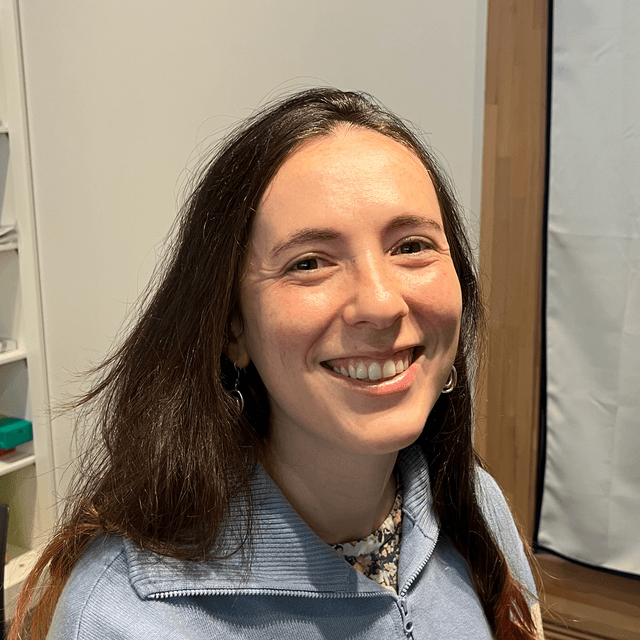
After a brief stint at her home institution in Stockholm, Marina has returned to the Longo Lab to continue her research on the evolution of exon structure (and provide some much needed programming mentorship to all those around her). Welcome back, Marina!
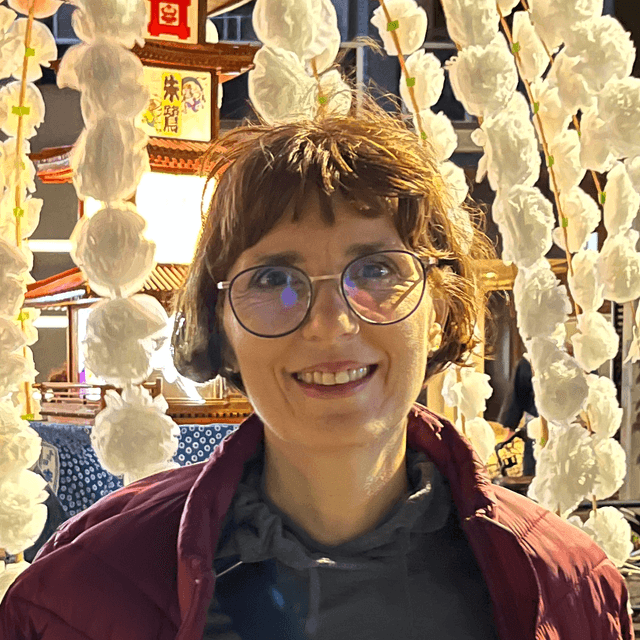
Prof. Gruić Sovulj is an expert in the enzymology of amino-acyl tRNA synthetases, the enzymes that define the genetic code. During her 2-month visit to the Longo Lab at ELSI, she will use bioinformatic approaches to study the evolution of this most important enzyme class.
Tatsuya Corlett Joins Longo LabSep 2023
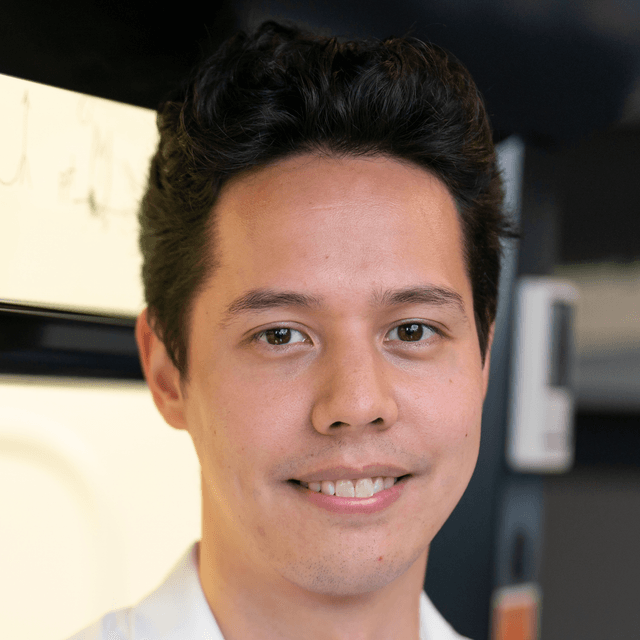
Tatsuya received a Bachelor's degree in Biological Chemistry from the University of Toronto. As a student in the ELSI Graduate Program, his research efforts will focus on the origin of life and the emergence of complex biopolymer structure. Welcome, Tatsuya!
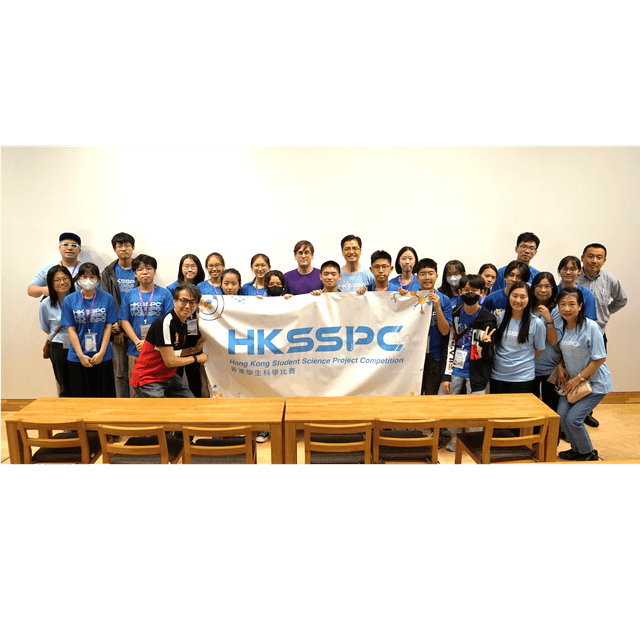
My passion for science started with Science Fair, and so it was a great pleasure to be able to share my research on early protein evolution with these amazingly talented young scientists! Image credit: ELSI